

When Local Isn't a Zip Code
How Virtual Spaces Create a Sense of Place

Imagine this
You’re curled up on your couch, laptop balanced on a pillow, attending a poetry workshop with people scattered across the country. You laugh, share stories, and feel that spark of belonging.
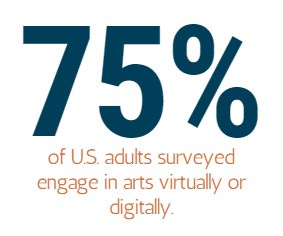
Here’s the kicker—according to the National Endowment for the Arts (NEA), 75% of those surveyed reported consuming arts virtually or digitally (NEA 2024). Yet, when these reports (and funders) talk about “local arts,” they still mean zip codes and street addresses.
So, let’s ask the question: If most of us are engaging digitally, why do we still define “local” by geography?
What Is ‘Sense of Place’?
Scholars have wrestled with this for decades. Sense of place is the emotional, identity-based, and functional bond we form with a location. Yi-Fu Tuan called it topophilia—love of place. Edward Relph warned about placelessness in a globalized world.
Modern frameworks, like Scannell & Gifford’s Person–Process–Place model (2010), break it down into:
Place attachment (emotional bond, our social and physical attachments to it)
Place identity (how a place shapes who we are and how we relate to a place)
Place dependence (how it meets our needs, its physical characteristics)
Traditionally, these ideas orbit around physical geography. But here’s the twist: what happens when “place” isn’t physical at all?
NEA Data Shows the Shift
Two NEA reports tell a clear story:
Digital arts engagement is dominant—three out of four adults consume arts online.
Home-based creation is rising—more people are making art at home than attending galleries, museums, and in-person art classes.
Arts engagement reduces loneliness and boosts belonging—people who create or attend arts events report stronger social ties. And BONUS, social connection is the cure for the loneliness epidemic (NEA SPPA 2022). (There’s a ton of literature out there on this besides the NEA reports, see Project Unlonely and Jeremy Nobel’s work for a start)
You might think this is a “pandemic bump” because one of the reports looks at data from 2002 to 2022. But the other report is from 2024. It shows that digital consumption of creative experiences and performances have increased while in-person attendance at arts events, classes and performances is down across the U.S. This is a trend, not a bump.
The issue with these reports—and most cultural policy frameworks—is they dismiss the data on virtual engagement and default to geography—zip codes, counties, and street addresses.
This definition of local leaves a lot of us with chronic illness out. Because—at least for me—I don’t want to pay for an in-person class and then either not be able to go because of a flare up or get there and be triggered by smells from the materials, or another person’s laundry products and perfume (don’t get me started on dryer sheets!).
Beyond this, limiting the definition of local and place-based making to only geography denies the communities that can be—and have been—created online (e.g. online gaming communities). If belonging and identity are the heart of sense of place, then virtual spaces aren’t just valid, they’re vital.
Virtual Spaces as Local
I started rethinking the idea of local during the pandemic. In April 2020, I sent a Zoom invite to several college friends scattered across the state to join me for a virtual happy hour that week. At the end of happy hour, someone said, “See you next week” and Pandemic Happy Hour was born. We met on Zoom every Friday at 5pm.
FOR THREE YEARS y’all.
We celebrated birthdays, did trivia nights, made puppets, reviewed books, supported each other through job losses and family illnesses and personal health issues. We grieved together over the loss of pets and family members.


Zoom was our town square. We were in everyone’s living room, kitchen, or yard every week. Pets made cameo appearances. Ironically, I saw these folks more during the pandemic than I had in about 25 years.
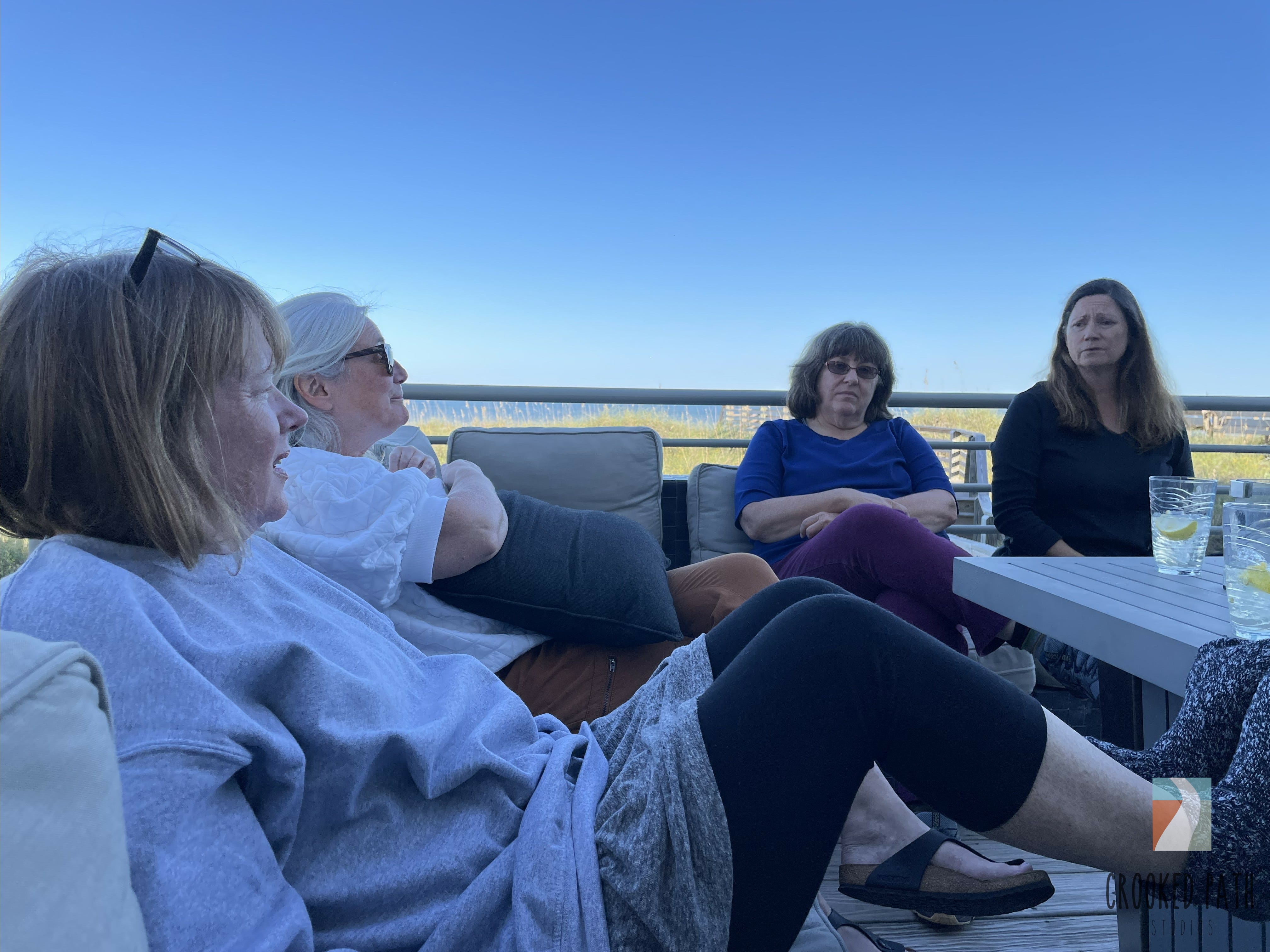
In 2021, we rented a beach house, and all went on a vacation together—first time ever! It was glorious.
We still meet virtually, one Sunday a month. We help each other through family stuff, retirement, hip replacements, and the loss of other pets and parents. This week we’re celebrating someone getting a publishing deal for their book.
Building a virtual place allowed us to overcome geography and schedules that had prevented us from gathering prior to the pandemic. It allowed us to be back in each other’s lives again at a time when the world felt most isolated.
Evidence: Virtual Programs Build Real Belonging
Research backs this experience up:
Virtual gallery visits reduce loneliness and foster reflection (Cotter et al., 2025).
Virtual choirs and dance programs foster strong belonging, reduce anxiety (Draper & Dingle, 2021)
Online dance programs reduced loneliness and built group identity (Finn et al. 2023)
Online art engagement improves mood and wellbeing—even with just a few minutes of exposure (Trupp et al., 2022).
Virtual art tours for older adults significantly boost positive emotions and life satisfaction (Averbach & Monin, 2022).
Programs like Virtual OMA connect generations and break isolation barriers (Lokon et al., 2024).
Bottom line? Virtual art spaces don’t just mimic in-person benefits, they often expand access for those excluded by geography, mobility, or health.
And this is where my vision for Crooked Path Studios is rooted.
Our “neighborhood” isn’t a block—it’s a community of condition: women and caregivers navigating chronic illness. Our town square? Substack, Zoom, and shared rituals.
We build continuity not through buildings but through rituals and creative arcs: Unfolding Path → Wayfinding → Practice. These are our cultural trail markers.
For those of us with chronic illness, this redefinition of “local” matters because
Validation: Making art from bed isn’t isolation—it’s community.
Transformation: From fragmented YouTube tutorials to structured, identity-based creative practice.
Liberation: A digital commons dismantles the invisibility of chronic illness.
Sense of place isn’t about sidewalks—it’s about meaning and connection. When people gather online to share art, they’re not floating in placeless space—they’re rooted in a shared narrative and identity.
Our Local
Crooked Path isn’t tied to a city or a street. Our “local” is the body we live in, the flare days we navigate, the creativity we reclaim.
So, before I go feed my herd of cats, let me ask you:
As someone with a rare chronic illness or a caregiver, how do you want to reframe local to support your wellbeing?
Where does belonging live for you—in your body, in your art, in a community?
And what does your home studio look like right now? I invite you to share a glimpse in the discussion. (As you can see, mine’s a mess.)
And remember, Crooked Path Studios is our neighborhood, and you’re a local.
—Kelly
This is such an insightful and important reframing. I’ve participated in many online courses, workshops, and creative communities over the years, and I’ve seen firsthand how virtual spaces create access, continuity, and belonging in ways that geography alone simply can’t.
Your point about “local” being defined too narrowly really resonated—especially as it impacts people navigating chronic illness, caregiving responsibilities, mobility challenges, or unpredictable schedules. Virtual communities often are the only viable pathway to consistent connection, creative practice, and support.
I appreciate how clearly you articulate that these spaces aren’t a substitute for “real life”—they are meaningful places in their own right, with their own rituals, relationships, and shared identity. It’s a conversation worth expanding, especially as arts engagement continues to evolve.
Beautifully written. Thank you for naming this truth so well.