

And Then There Was More
Illness Self-Story Part 3

My dad introduced himself to me at my sister’s cookout.
He walked over, hand out, friendly smile — the way you greet a stranger at a family gathering. “Hi, I’m Richard. How do you know Kim?”
I looked at him for a second. Then said, “Hi, I’m Kelly. Your oldest daughter. I’ve known Kim since the day she was born.”
Everyone standing around us burst out laughing. I’d said it the way you’d deliver a punchline, which it kind of was. He laughed too, that relieved laugh when you realize what just happened. And then his face changed.
“You look really sick. What kind of cancer is it?”
I had lost 90 pounds in eight months. Everyone assumed it was cancer, even my doctors. Because when a 53-year-old woman loses roughly eleven pounds a month without trying, there is exactly one story most people tell about that—cancer. Turns out, it was another rare, hard to explain chronic illness.
The Alarming Symptom
My new internist asked me a question at our first appointment that nobody had asked before.
Not what are your symptoms. Not how long has this been going on. She asked: “Which symptom are you most concerned about?”
Not annoyed by but concerned about.
The answer was the unexplained weight loss.
In September of 2018, I weighed 215 pounds on a five-foot seven-inch frame. I was obese by all standards. Eight months later at the cookout, I weighed 125. My exact weight in high school. Every menopausal woman is told the belly fat is coming and there’s not much you can do about it. This was not that; weight loss was not a goal. This was my body eating itself and nobody being able to tell me why.
My body changed in stages. Throughout the fall, I tightened my belt, then tightened it again. My tops went from fitted to draping off my shoulders. My wide calf boots bought specifically for my wider legs now slipped loose at my ankles. My wedding rings slid off my fingers. And my face, which had become full as I gained weight over the previous twenty years, was returning to its sharp, angular shape. I knew it was time to buy new clothes when my belt holding up my pants slid to the floor. I went from an XXL/18W to a medium in two months. When I held up an old pair of pants next to new ones, there was room for two people in the old pair.


By December, I had the MCAS diagnosis and started cromolyn sodium. I was reintroducing low histamine foods with the support of a nutritionist. I was not exercising because I couldn’t: the post-exertion malaise (PEM) was severe enough that exercise other than walking to the mailbox would put me down for days.
And still: ten pounds a month.
My new team of doctors wanted data and recommended a calorie counting app. I set a goal of 1800 calories a day and I was hitting it, sometimes exceeding it, with the help of my nutritionist. I brought the graphs to appointments — neat, color-coded, dated. Some doctors looked past them. I could feel myself being labeled, that particular dismissal reserved for patients who come in too prepared, who have done too much homework. But this was data they asked for, and I was a data person. The graphs said what they said.
And the weight kept dropping.
Cancer Would be a Relief
My dermatologist was the one who said it plainly, “Have they checked you for cancer?”
“Yes,” I told her. “That diagnosis would be a relief compared to not knowing.”
I heard myself say it and knew it was true. There’s something that happens when you’ve been symptomatic and undiagnosed long enough — when every test comes back normal and you can feel doctors quietly categorizing you as a problem to be managed rather than a patient who needs care. You start to understand that the medical system needs a name for what you have, or you don’t really exist inside it. Cancer has a name, it’s something people recognize at a cookout.
Not fitting into any of the medical boxes means you are, in a specific and terrible way, unknowable. And being unknowable means you get set aside.
So yes: I had started to hope for a diagnosis that terrified me, because at least it would make me medically real—knowable.
Several cancer tests had already come back negative before I was diagnosed with MCAS. So, first team of doctors had stopped testing.
When I told my new internist I was most concerned about unexplained weight loss was the most disconcerting, she said, “We’re looking for the rare and the weird.” And got to work. She thought it might be a rare type of neurological cancer because despite the cromolyn, most of my neurological symptoms continued. She ordered an MRI with contrast dye and a nuclear medicine scan of my chest. She sent me to a neurologist who specialized in rare neuro cancers.
In March, I did the MCAS prep for contrast dyes—a week of prednisone. Then the prep for the nuclear medicine scan—another week of prednisone. The neurologist was frank, “Your doctor sent you to me because she thinks you have a rare cancer.” I like frank doctors.
We Found Something
I was at home working when the calls started coming in.
The first call was from the doctor reading my nuclear medicine results. He told me they had found something. That my lungs, my lymph nodes, and my liver had all “lit up like a Christmas tree.”
They found something.
About twenty minutes later my internist called. She was scheduling me with the pulmonology clinic at the university.
Twenty minutes after that, my neurologist called. “It doesn’t look like cancer,” he said. “But it could be Sarcoidosis and possibly neurosarc.”
Three doctors. Sixty minutes. We found something. Each with some excitement in their voice, happy to have solved a mystery.
I cried. Not from fear — from relief. Pure, overwhelming relief. After nine months of every test coming back normal, not being believed, and wishing for cancer: something was there. Something real that you could see on a scan. Something knowable. I began researching Sarcoidosis.
The pulmonologist was cautious about jumping to conclusions and preferred to confirm anything through a lung biopsy. My bronchoscopy was scheduled at the university hospital. I have never been so excited for a surgery.
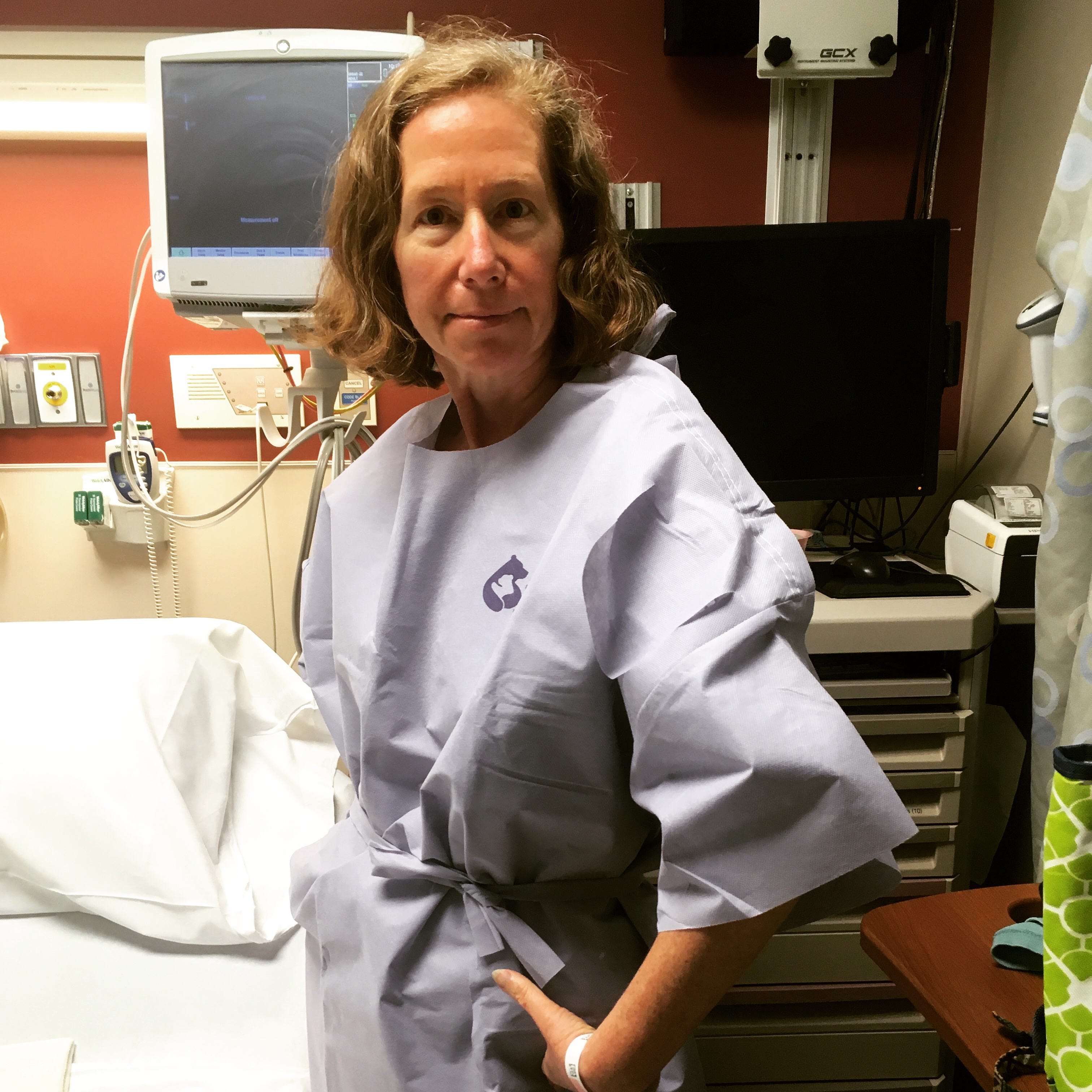
The nurse came in to give me the line and asked if I had any allergies. I said I had MCAS. She nodded and mentioned, almost in passing, that I was her third MCAS patient that week — then suggested we skip the numbing agent, since the agent itself can trigger a reaction in MCAS patients. She knew. Without me explaining. Without me advocating. She just knew.
Her. third. MCAS patient.
I don’t know if she understood what that meant to me. To be in a room where my condition was ordinary — where the nurses knew the protocols by heart because they saw this regularly — was a specific kind of relief I hadn’t known I needed. This is what a research hospital does, I thought. This is why it matters.
She put the line in without any numbing agent.
After the procedure, when I was coming out of anesthesia, they told me the biopsies had confirmed Sarcoidosis. Three organs: lungs, lymph nodes, and liver.
Sarcoidosis (Sar-koi-dosis)
Sarcoidosis is another inflammatory disease where your immune system overreacts. The result is lumps of white blood cells called granulomas that can develop anywhere on the body, most often the lungs and lymph nodes. This is your immune system trying to protect you from something by smothering it with white blood cells that calcify. If the granulomas are big enough, they can cause fibrosis and permanent damage to an organ.
Because Sarcoidosis can appear anywhere on the body, some of the symptoms overlap with MCAS: fatigue, joint pain, muscle weakness, shortness of breath, blurry vision, red swollen eyes, irregular heartbeat, and heart palpitations. I had all of those. But a few symptoms are unique to Sarc, like unexplained weight loss. Extremely swollen lymph nodes is another. Most days my arm pits were so bruised from the swelling it looked like someone punched me and I could not move my arms. Several of my neurological symptoms could not be explained by MCAS—the weak facial muscles and random palsy and, apparently, the increased thirst and frequent trips to the bathroom.
Sarc is more common in women and certain ethnic groups, especially African Americans, northern Europeans, and Puerto Ricans. African American women represent the highest risk group. You are at higher risk of getting Sarcoidosis if you work in environments exposing you to dust, mold, and chemicals. You would think that would limit the risk to people working in agriculture, manufacturing or construction. But people working in healthcare, teaching, and offices are also at high risk (my money is on the mold). The World Trade Center first responders are the highest risk occupational group ever studied. First responders (and dogs) working on the debris pile have 4 times the expected rate of sarcoidosis. This provided evidence supporting the theory that genetically susceptible people develop sarcoidosis after exposure to environmental or occupational triggers.
A few days after my bronchoscopy, I checked the pathology report on my biopsies. It showed the biopsies had been tested for mold. Quietly without any announcement. The institution that finally believed me had tested for the thing previous doctors had dismissed as impossible. But it wasn’t.
The Sarcoidosis clinic at the university scheduled of string of new appointments and tests. My neurologist called to schedule some MRIs for neurosarcoidosis testing. Neurosarc was never confirmed on the scans. My neurologist called it para-sarcoid syndrome—when you have all the symptoms, but they can’t find anything in the MRIs. I get scanned every other year now just to make sure.
Again, I almost fit into the medical box. Almost.
And Then
That’s two rare diseases diagnosed in less than a year, if you’re keeping track. I knew how lucky I was and felt like I had a way forward.
That changed in the weeks that followed.
I had been working from home the entire time I’d been sick, starting in September. Every report delivered on time, accurate, and every deadline met. I had helped ten faculty members win grants using institutional data I’d identified for them. The illnesses were invisible to my employer because I had made them invisible. I showed up in every way that counted except physically, and nobody had asked me to do otherwise.
After the Sarcoidosis diagnosis, I sent a letter informing my employer that I had been diagnosed with a second rare disease and formally requested accommodations.
They responded by demanding I “return to work in the office.” No accommodations would be considered. I was instructed to report in person by July 1st — about a month away — or consider myself terminated.
My doctors had told me to reduce my stress. And my employer had just told me: show up or get out.
I had a different plan.
Visit the Foundation for Sarcoidosis Research to learn more and help find a cure.
If this story is yours too
Crooked Path Studios is an online therapeutic arts community for women navigating rare and complex chronic illness — MCAS, Sarcoidosis, POTS, EDS, long COVID, and the others that don’t have easy names and hide in plain sight.
The Wayfinding membership is where we do the deeper work: monthly live Open Studios, workshops and member’s only creative practices within a community of women who already know what you mean when you say your labs came back normal.
You don’t have to explain yourself here.
There will always be a free Unfolding Path tier with short therapeutic practices, studio reflections, and arts & health insights for women navigating chronic illness.
Because healing isn’t linear and neither is art.